Ask the right question
and you are automatically
a member
Previously, I have written about the progression from positive interest rates to zero interest rates (since 2008) and finally to negative interest rates. And I asked my readers a simple question: How will negative interest rates blow up the financial system? And apparently none of you knew the answer. Now, I must confess that to start with I didn’t know the answer either, which is why I asked the question, and my first attempts at finding it were somewhat tentative. But now, having thought about it, I do seem to have found the answer, and it is that…
But first let us back up a bit and answer several preliminary questions:
1. Why did zero interest rates become necessary?
2. Why are negative interest rates now necessary? and,
3. Why are negative interest rates a really excellent idea?*
* if you ignore certain unintended consequences (which is what everyone does all the time, so let’s not worry about them just yet).
We, the undersigned, are Russians living and working in the USA. We have been watching with increasing anxiety as the current US and NATO policies have set us on an extremely dangerous collision course with the Russian Federation, as well as with China. Many respected, patriotic Americans, such as Paul Craig Roberts, Stephen Cohen, Philip Giraldi, Ray McGovern and many others have been issuing warnings of a looming a Third World War. But their voices have been all but lost among the din of a mass media that is full of deceptive and inaccurate stories that characterize the Russian economy as being in shambles and the Russian military as weak—all based on no evidence. But we—knowing both Russian history and the current state of Russian society and the Russian military, cannot swallow these lies. We now feel that it is our duty, as Russians living in the US, to warn the American people that they are being lied to, and to tell them the truth. And the truth is simply this:
If there is going to be a war with Russia, then the United States
will most certainly be destroyed, and most of us will end up dead.
Let us take a step back and put what is happening in a historical context. Russia has suffered a great deal at the hands of foreign invaders, losing 22 million people in World War II. Most of the dead were civilians, because the country was invaded, and the Russians have vowed to never let such a disaster happen again. Each time Russia had been invaded, she emerged victorious. In 1812 Nepoleon invaded Russia; in 1814 Russian cavalry rode into Paris. On June 22, 1941, Hitler’s Luftwaffe bombed Kiev; On May 8, 1945, Soviet troops rolled into Berlin.
But times have changed since then. If Hitler were to attack Russia today, he would be dead 20 to 30 minutes later, his bunker reduced to glowing rubble by a strike from a Kalibr supersonic cruise missile launched from a small Russian navy ship somewhere in the Baltic Sea. The operational abilities of the new Russian military have been most persuasively demonstrated during the recent action against ISIS, Al Nusra and other foreign-funded terrorist groups operating in Syria. A long time ago Russia had to respond to provocations by fighting land battles on her own territory, then launching a counter-invasion; but this is no longer necessary. Russia’s new weapons make retaliation instant, undetectable, unstoppable and perfectly lethal.
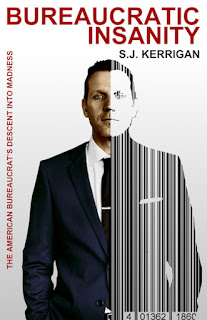
In this excerpt from his new book, Bureaucratic Insanity: The American Bureaucrat’s Descent into Madness, Sean Kerrigan notes that institutional violence isn’t just limited to schools and offices. In their frantic search for meaning, many Americans have turned into bloodthirsty maniacs, pushing for more wars abroad and even nuclear war that would obliterate them.
***
In one of his final HBO specials, Life is Worth Losing, comedian George Carlin explained that, in a sense, destruction gave him joy. He said:
I have absolutely no sympathy for human beings whatsoever. None. And no matter what kind of problem humans are facing, whether it’s natural or man-made, I always hope it gets worse.
Carolyn Baker took over this radio show from Mike Ruppert (RIP), did it on PRN for a while, and has recently struck out on her own, turning it into a pure podcast.
In this episode we discuss all sorts of things: economic collapse, the presidential election farce, climate upheaval and much else. Please tune in and have a listen.
Schools in America today are less concerned about the overall welfare of students than they are with making sure that they obey all the rules, no matter how pointless, and produce good test scores. The emphasis on mindless obedience and rote learning prepares them for dehumanizing office work, where employers don’t even try to pretend that they care about the welfare of their workers. Instead, they shame them for taking vacation time and force them to work overtime for free. Employers and school administrators only care about what they can produce: children are treated no differently from widgets, and employees are treated no differently from robots.
When Barack Obama was elected President of the United States in 2008 this was treated as a landmark event. He presented himself as the underdog, an outsider from a minority background, who spoke eloquently about a fairer society, an end to war in the Middle East, transparency in government and a green future. His speeches promised “change” and “hope,” and voters were infused with optimism. Eight years later a fair assessment of his efforts is that they were hardly any better than George W. Bush’s.
In the current election cycle there are two new candidates pledging hope and change: Bernie Sanders and Donald Trump. Occupying opposite corners, they have painted pictures of two very different futures for the United States: democratic socialist and cult-of-personality capitalist.
Their campaign speeches are interesting to observe. In trying to make sense of their success, particularly in the case of Trump, it is apparent that the idea of a savior is infectious and appealing.
This November, I heartily encourage all Americans to exercise their civic duty by going to the polls and voting for one of the dignified Presidential candidates that have amazed us this election cycle with their wisdom and compassion... not!
Unfortunately, this is not a laughing matter. A large segment of the U.S. population is now very aware of the fact that our political and economic systems have become totally corrupt. And yet these knowledgeable people still cling to the delusion that this tragic state of affairs can be changed by voting.
Every once in a while I gently attempt to discuss this topic in “polite company.” It is astonishing how ferociously these “polite” people defend the myth of the ballot box. And so I will try to disabuse these well-meaning citizens from this idealistic concept, which has been relentlessly programmed into us since grammar school. I assure you that I received the same brainwashing, and I once believed in the power and nobility of casting ballots. And indeed, voting probably did “make a difference” at one time.
But the world of power politics has changed drastically. I contend that voting is not just meaningless in our present situation, but that it is actually harmful. That is a pretty bold and provocative statement, but I will now do my best to defend this contrarian belief. I will attempt to do so in a concise but comprehensive manner.
“The more laws and commands there are,
the more thieves and robbers there will be.” Lao Tzu
Information leaked in the Panama Papers about the use of tax havens certainly supports this statement! Under the cover of the law thieves and robbers have been maintaining their privilege and ultra-wealth by being tricky. Many of them are leaders – politicians, monarchs and business executives. “I have done nothing illegal,” they say as their souls disappear a little further into a fog. And from the germ of their example a cancer grows.
Rules work best when they are kept to a minimum.
This I have seen illustrated in the context of the business I am involved in. We are a construction company employing approximately 150 people, a mix from all walks of life – old friends, relatives of workers who needed a job, qualified recruits who fitted the mold, troubled youth recommended by the courts as worthy of a second chance, odd bods and colorful characters who fell into each others' orbits. Some are very skilled and others developing.
The types of stories reported in Sean Kerrigan's bookBureaucratic Insanity are extremely common, in schools, government and in workplaces. Every week another story emerges in the media of someone being railroaded by the insane bureaucrats that infest the system. But that's just the media; if they reported every such story, they would have no time left over for anything else. And so most people continue to delude themselves that this is all business as usual, nothing special, certainly nothing utterly insane going on.
But it is in your power to change that: if you tweet out the hashtag
#bureaucraticinsanity
along with a short summary of any event you experience, witness or become aware of that has an element of "bureaucratic insanity" in it, that would drive traffic to the term, and to Sean's book. And then more people will learn what's happened to their country, and what's about to happen to them. For my part, I promise to follow the hashtag, sort through the tweets and publish Best of Bureaucratic Insanity compilations on this very blog.
Rest assured, this problem is a serious, widespread, medical issue, but no men in white suits will rush to your rescue, subdue insane American bureaucrats, put them in restraints and haul them off to the funny farm. No, you will have to deal with them yourselves—before they deal with you! And the first step in doing so is to find out who they are and what damage they are causing.
Here's a video clip from RT's show Redacted Tonight, where Lee Camp talks about grandparents imprisoned for failing to return to the county public library a Dr. Seuss book they took out for a grandchild and other such events that have come to typify contemporary America.
In contemporary United States a child can be charged with battery for throwing a piece of candy at a schoolfriend. Students can be placed in solitary confinement for cutting class. Adults aren’t much better off: in 2011 the Supreme Court decided in 2011 that anyone the police arrest, even for an offense as minor as an unpaid traffic ticket, can be strip-searched. These acts of official violence are just the tip of the iceberg in our society.
The number of rules and laws to which Americans, mostly unbeknownst to them, are subject, is hilariously excessive. But what makes this comedy unbearable is that these rules and laws are often enforced with an overabundance of self-righteous venom. Increasingly, contemporary American bureaucrats—be they police, teachers or government officials—are obsessed with following strict rules and mercilessly punishing all those who fail to comply (unless they are very rich or politically connected).